
Round Brilliant Cut Diamond: The Complete Guide
The round brilliant cut diamond is the world's most popular diamond shape, and its standing rests on physics as much as fashion. Fifty-seven or fifty-eight facets are arranged to return light as brightness, fire and scintillation, a design refined for more than a century. This guide explains what defines the round brilliant, how cut quality controls its sparkle, the best settings and ring styles, how it compares with oval and other shapes in the complete shape comparison, and what drives a round brilliant cut diamond price.
Round brilliant diamonds at a glance
- The most popular diamond shape in the world and the timeless standard for engagement rings.
- Cut with 57 or 58 facets arranged to return maximum brightness, fire and scintillation.
- The only diamond shape with standardized cut grades from major laboratories.
- Optimized proportions make it the benchmark other shapes are compared against for sparkle.
- Usually the highest price per carat because cutting wastes more rough and demand is strongest.
- A neutral circular outline that suits every setting style, wedding band and hand shape.
What is a round brilliant cut diamond?
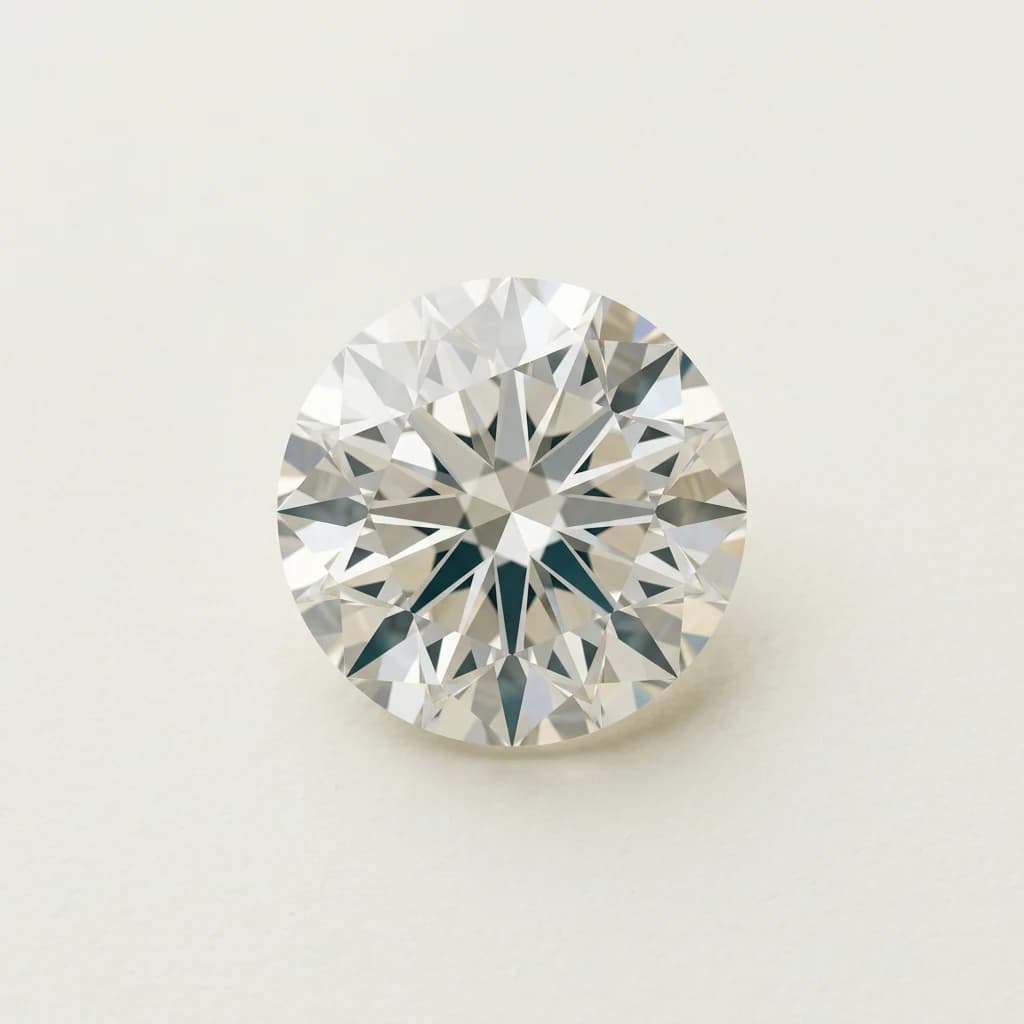
A round brilliant cut diamond is a diamond with a circular outline and a precise facet arrangement built for maximum light return. The modern standard cuts the stone with 57 or 58 facets: a table and crown facets above the girdle, a pavilion below it, and either a pointed or a small flat culet at the bottom. Each angle is set so light entering through the table reflects off the pavilion facets and returns through the top instead of leaking out the sides. The result is the bright, lively sparkle the shape is famous for, produced by proportions, symmetry and polish working together.
The round brilliant is the most popular diamond shape in the world and the classic choice for engagement rings, a position it has held for generations. The outline is a simple circle, which suits every setting style and hand shape, while the facet pattern is the most studied in the industry. Early twentieth-century research into ideal proportions created the blueprint that modern cutters still refine, and today laboratories measure the result facet by facet. Because the shape is standardized, buyers can compare documented cut grades across stones, and laboratory-grown production has made well-cut round brilliants more accessible than ever.
Why cut quality drives sparkle
Among the 4Cs, cut is the one that controls how a diamond behaves in light. A round brilliant's sparkle comes from three effects working together: brightness, the white light returned from the stone; fire, the colored flashes produced when light is bent through the facets; and scintillation, the pattern of light and dark that sparkles as the stone moves. Proportions, symmetry and polish decide how well the stone performs. If the pavilion is too deep or too shallow, light leaks out the bottom or the sides and the diamond looks dull, even when the color and clarity grades are high. The same optical rules govern round brilliants grown in a laboratory and natural stones alike.
The round brilliant is the only diamond shape for which major laboratories issue standardized cut grades, which sit alongside the clarity grade scale on every report, making comparison easier. Graders assess proportions, symmetry and polish and assign a grade on a scale from Excellent and Very Good down through Good, Fair and Poor. This explains the common search for round brilliant cut diamond vs excellent cut: an excellent cut is not a different shape, it is the top cut grade a round brilliant can receive and describes how well the stone is made. When buyers weigh the two terms, they are usually asking the same question: is this diamond cut to the highest standard?
- Brightness: the white light returned through the top of the stone.
- Fire: the colored flashes produced when light is bent through the facets.
- Scintillation: the sparkle pattern that appears as the diamond moves.
- Proportions, symmetry and polish determine all three, and cut grade is how laboratories score them.
- Only the round brilliant receives standardized cut grades, so like-for-like comparison is possible.
Best settings and ring styles
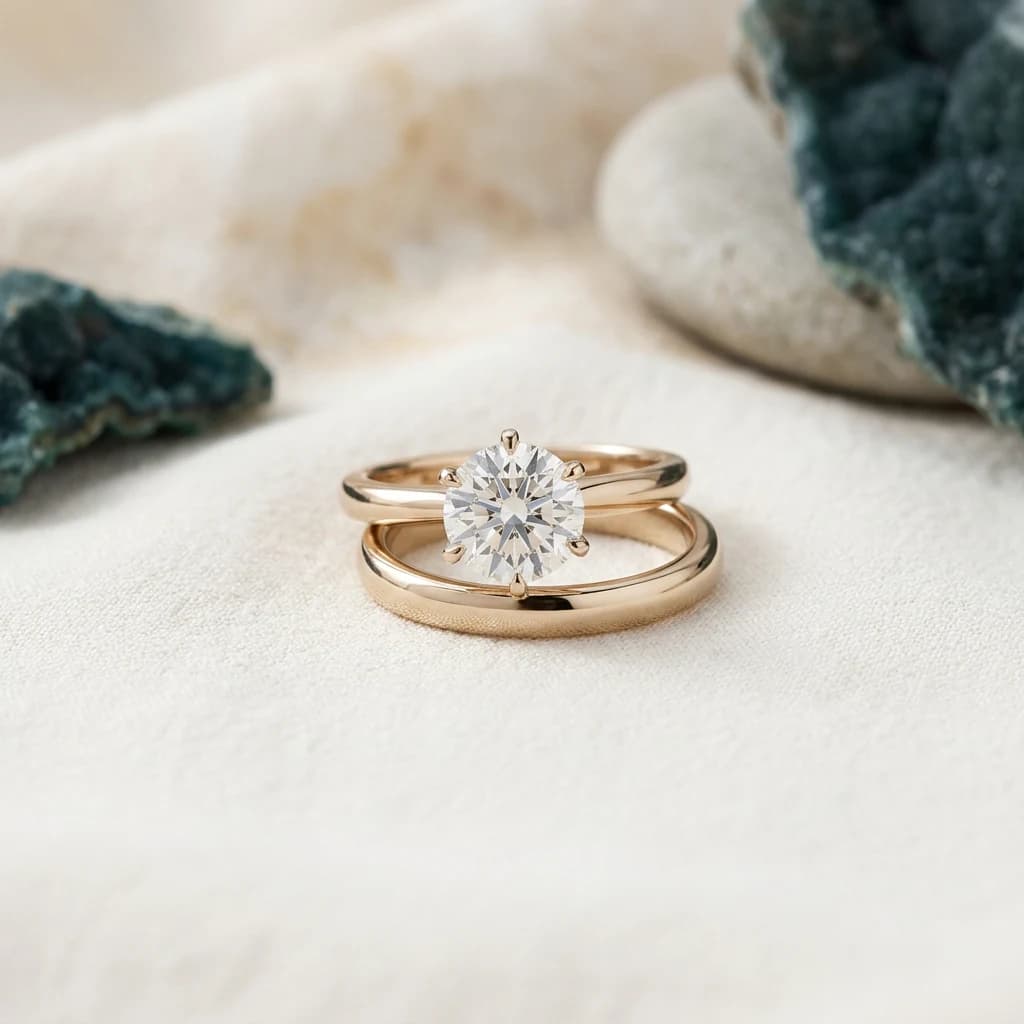
The round brilliant's circular outline makes it the most flexible center stone in jewelry, working with the widest range of ring settings. A solitaire places one round diamond on a plain band and lets the stone's sparkle carry the design, while pavé adds a line of small diamonds along the band for continuous light. A halo surrounds the center with accent stones, making the round read larger, while a three-stone design frames it with side stones for added presence. For active lifestyles, a bezel wraps the stone in a protective metal rim. A round brilliant cut diamond ring succeeds in every style because the shape has no corners to align.
Pairing the ring with a wedding band is equally simple. A classic straight band sits flush or nearly flush against most round solitaires, while a contoured or curved band follows the basket of the setting for a tighter fit. Some buyers prefer a plain metal band that lets the engagement ring sparkle alone; others stack pavé or diamond bands for layered light. Because the round is symmetrical, almost any band pairing looks intentional. The safest approach is to try them together or order both from the same collection, where metal and profile are designed to match.
- Solitaire: one round center on a plain band, the purest showcase for the stone's sparkle.
- Pavé: small diamonds along the band add continuous light without touching the center.
- Halo: a ring of accent stones makes the round read larger and adds vintage character.
- Three-stone: side stones frame the center and add presence without a larger diamond.
- Bezel: a metal rim protects the stone and suits an active, everyday lifestyle.
- Wedding band: straight, contoured or stacked bands all pair naturally with the round outline.
Round vs oval and other shapes
The round brilliant's main alternative today is the oval cut, and the choice usually comes down to outline. A round is a circle with the industry's most standardized proportions and the maximum light return possible; every facet follows a century of refinement. An oval stretches the same brilliant facet pattern along a longer outline, which makes the finger look slimmer and the stone read larger for its carat weight. The trade-off is standardization: ovals do not receive standardized cut grades, so their sparkle varies more stone to stone and must be judged individually in photos and video.
Per-carat size differences work the same way across shapes, and that same weight logic carries through to how prices are set. Carat measures weight, not face-up dimensions, so a shape that spreads its weight across a longer outline, such as oval, pear or marquise, reads larger than a round of the same carat weight. The round concentrates its weight in a compact circle, so it can look smaller than an elongated shape but brighter in light. Comparing millimeter measurements rather than carat alone is the honest way to judge size. For buyers who want maximum sparkle predictability, round wins; for those who want length and a modern line, oval is the classic alternative.
- Round: circular outline, standardized cut grades and the benchmark for light return.
- Oval: elongated outline that reads larger per carat and flatters longer fingers.
- Compare millimeter dimensions, not carat alone: carat measures weight, not face-up size.
- Oval sparkle varies stone to stone; round sparkle is far more predictable.
Price and value
The round brilliant usually carries the highest price per carat among the standard shapes, for two reasons. Cutting a round from a piece of rough wastes more of the crystal than cutting an elongated or square shape, so more raw material goes into each finished carat. Demand is also the strongest of any shape, and price follows demand. The same principle holds for laboratory-grown stones: the growth technology and grading effort are similar across shapes, but the round's combination of rough loss and popularity keeps its price per carat above the alternatives in most catalogs, including Belaroq's, before the VS vs VVS pricing question comes into play.
Within a budget, the clarity choice is the most practical lever, and Belaroq's catalog has a fixed, verifiable relationship for it: a product's displayed VVS price sits 30% above the same product's VS price, a rule captured in a July 2026 catalog snapshot. For most round brilliants, VS clarity is already eye-clean, so the VVS upgrade is a choice rather than a requirement. Entry into the category is deliberate: complete laboratory-grown pieces in the jewelry-under-500 collection start at or below $500. Custom round diamond pieces follow the made-to-order path and typically take about 30 days from confirmed specification to completion.
- Rough loss: round brilliants waste more rough per carat than most shapes, which raises cost.
- Demand: the round's universal popularity keeps its price per carat above the alternatives.
- VS anchor: within Belaroq's catalog, VVS displays 30% above the same product's VS price (July 2026 snapshot).
- Entry anchor: complete lab-grown pieces in the jewelry-under-500 collection start at or below $500.
- Lead-time anchor: custom round pieces typically take about 30 days from confirmed specification.
- No invented numbers: Belaroq states its own catalog anchors and points to product pages for current round brilliant cut diamond price.
Editorial illustration created for Belaroq with Gemini 3.1 Flash Image via APIYi.
Round brilliant diamond questions, answered
Concise answers to the questions buyers ask most about round brilliant diamonds.
What is a round brilliant cut diamond?
A round brilliant is a diamond with a circular outline cut to 57 or 58 facets arranged for maximum light return. It is the world's most popular diamond shape and the only one with standardized cut grades from major laboratories. The round outline is timeless, while the facet pattern produces the shape's famous brightness, fire and scintillation.
What does an excellent cut round diamond mean?
Excellent is the top cut grade a round brilliant can receive. It means the stone's proportions, symmetry and polish meet the laboratory's highest standard for light return, so the diamond performs close to its optical potential. The grade describes craftsmanship, not a different shape: an excellent cut round is simply a round brilliant cut to the best measurable standard.
How do you pair a round brilliant ring with a wedding band?
A straight band sits cleanly against most round solitaires, a contoured band follows the curve of the setting basket, and stacked bands layer extra sparkle. Because the round outline is symmetrical, almost any band style looks intentional. Matching the metal color and ordering both rings from the same collection is the easiest way to ensure they sit well together.
Why are round brilliant diamonds more expensive?
Two forces drive the premium. Cutting a round wastes more rough than most shapes, so more raw crystal goes into each finished carat, and demand for rounds is higher than for any other shape. The same pattern holds for laboratory-grown stones: round brilliant cut diamond price per carat typically sits above comparable shapes across catalogs.
What does a round brilliant engagement ring mean?
A round brilliant engagement ring is a ring whose center stone is a round brilliant cut diamond, the classic and most popular choice. The circular outline suits every setting and hand shape, and the standardized facet pattern delivers reliable sparkle. It means choosing the timeless standard rather than a more specialized or elongated outline.
Do round brilliant diamonds sparkle the most?
Among the standard shapes, the round brilliant returns the most light for its proportions because its facet arrangement is optimized and standardized. Its brightness, fire and scintillation are the reference point other shapes are compared against. Other shapes sparkle beautifully too, but the round remains the benchmark for all-around light performance.
How much is a round brilliant diamond ring?
Price depends on the stone's documented characteristics and the design. Belaroq does not quote invented market prices, so the useful anchors are its own: complete laboratory-grown pieces in the jewelry-under-500 collection start at or below $500, and a VVS display price sits 30% above the same product's VS price.
Is round brilliant good for any hand shape?
Yes. The circle is the most neutral outline in jewelry, so a round brilliant flatters every hand shape and finger length without the elongating effect of oval or marquise. Buyers wanting more length can choose side stones, halos or split bands to add it, keeping the round's sparkle while adjusting the visual line.
The practical takeaway
The round brilliant cut diamond is the default for a reason: a circular outline with a standardized 57- or 58-facet pattern that returns more predictable sparkle than any other shape. Cut grade is the first thing to compare, because an excellent cut round and a poorly cut one are different stones even at the same color and clarity. The shape works in every setting, pairs naturally with any wedding band and flatters every hand, which is why the round remains the standard for everyday engagement rings. The premium it carries over other shapes reflects rough loss and demand, not just tradition. With laboratory-grown production, documented reports and Belaroq's own catalog anchors, a well-cut round brilliant is within reach at every budget tier.