
Lab-Grown Diamond Value: Price, Resale and What Lasts
Lab-grown diamonds carry the same grades and documentation as natural diamonds, yet one question follows nearly every buyer. Once you understand the lab-grown diamond basics, what is the stone worth in a few years, and can it be resold? This guide answers honestly. It explains what resale value actually means, why resale is limited for both origins, how natural and lab-grown resale compare, and where lab-grown prices have been heading. Its central point: for most buyers, the value that counts is worn every day, not resold later.
Buy a lab-grown diamond for what it gives you every day, never as an investment — resale is limited for both origins.
A lab-grown diamond's honest value is the beauty, meaning and daily wear it provides; resale is generally limited for both origins, and a natural diamond also resells for less than most buyers assume.
Lab-grown diamond value at a glance
- Lab-grown diamond resale value is generally limited: the secondhand market for pre-owned stones is thin, fragmented and rarely formal.
- Natural diamond resale is also uncertain, with most stones selling back for less than buyers expect.
- Lab-grown retail prices have generally declined as production scaled, shrinking any absolute resale loss.
- Cost per wear is the honest value metric for jewelry that is worn every day.
- Grading reports document a stone's identity and quality — they never guarantee a resale price.
- Belaroq backs every piece with a lifetime warranty and free resizing, service value that travels with it.
- Complete lab-grown pieces exist at or below US$500 in Belaroq's jewelry-under-500 collection.
What does resale value actually mean?
Retail, wholesale and resale are three different prices, and most disappointment begins with mixing them up. The retail price you pay includes design, craftsmanship, grading, retail service, warranty and the cost of running a store. The resale price is whatever a buyer in the secondhand market will pay for the finished piece — a market with far fewer buyers, heavy discounting and no fixed rules. Those two prices were never meant to match, for jewelry of any origin, and treating them as a single number is where inflated expectations start. Understanding the gap before buying is the cheapest insurance a jewelry purchase can have.
Resale value also applies to finished jewelry, not to a loose-stone commodity claim. A ring or necklace is a designed, assembled object, and its secondhand price depends on condition, style, current demand and who is willing to buy it — not on what its materials once cost. A piece in a timeless design with complete documentation will always find a buyer more easily than a dated, undocumented one, but neither carries a guaranteed resale figure. Honesty comes first here: nobody can promise a specific resale number for any piece. Anyone who does is selling you a story, not a valuation.
- Retail price includes design, work, service and margin
- Resale price is set by the secondhand market, which discounts heavily
- Resale applies to finished jewelry, not loose-stone commodity claims
- Condition, style and documentation decide how easily a piece sells
- Nobody can honestly promise a specific future resale figure
- Know which number you are looking at before you buy
Do lab-grown diamonds have resale value?
Lab-grown diamonds do have some resale value — pre-owned pieces do change hands — but the market is thin and fragmented, and buy-back or trade-in programs that accept lab-grown stones are rare. Most jewelers run new-sales businesses rather than secondary-market desks, and a lab-grown stone's resale typically lands at a small fraction of its retail price. What makes this structurally unlikely to improve is lab-grown price trends: when new supply keeps arriving at falling prices, secondhand buyers have little reason to pay near-retail for a used stone. The resale channel exists; it is simply not a reliable one, and no honest seller claims otherwise.
The useful question is not whether resale value exists but whether it is dependable, and the honest answer is no. Because lab-grown production can scale with demand, a pre-owned buyer can often buy new for a modest premium over used, which caps every resale offer. Condition, setting style and documentation still move the number: a certified stone in a timeless solitaire will resell more easily than an uncertified stone in a dated mounting. Both, however, should be counted on to return only part of their purchase price, never the whole of it. Planning on more turns a purchase into a gamble the market does not offer.
- Resale exists, but the market is thin, fragmented and rarely formal
- Buy-back and trade-in programs for lab-grown stones are rare
- New supply at falling prices caps what pre-owned buyers will pay
- A lab-grown stone's resale is typically a small fraction of its retail price
- Certified stones in timeless settings resell more easily, but still below retail
Natural vs lab-grown resale comparison
Both origins resell below retail; the difference is degree, not category. Natural diamonds carry a reputation for holding value, but most natural stones also sell back for less than buyers assume, with results varying widely by grade, size and market. Lab-grown resale is generally weaker still, because supply is not capped by what mines happen to yield. The supply models behind each market are explained in the lab-grown versus natural comparison; for resale purposes, the practical difference is how much lower the lab-grown purchase price started. That starting gap, not any percentage promise, is what a buyer should carry into the comparison.
The fair way to compare is in the absolute loss on the piece you actually buy, not in a percentage of retail. A lower purchase price means a smaller total outlay at risk, so a lab-grown piece can cost less to own over its life even when its resale fraction is small. Neither origin should be bought as an investment, and no percentage claims appear in this guide because honest figures depend on the stone, the market and the moment. The table below compares the structural realities that do not change. Structure is stable; the numbers on any given sale are not.
- Both origins resell below retail; the difference is degree, not category
- Natural rarity supports the top of the natural market
- Lab-grown supply can always scale, which caps secondary demand
- Compare absolute loss on the piece, not percentages of retail
| Resale question | Lab-grown diamond | Natural diamond |
|---|---|---|
| Typical resale reality | Limited: a thin secondhand market, usually a small fraction of retail, with few formal channels | Uncertain: most stones sell back below retail, with wide variation by grade and market |
| Trade-in and buy-back programs | Rare: few jewelers accept lab-grown stones in trade | More common, but usually tied to upgrading into a higher-priced purchase |
| Why prices behave differently | Supply scales with demand, so new stones keep arriving | Supply depends on what mines yield, and top grades are genuinely scarce |
| Long-term rarity context | No meaningful rarity — more stones can always be grown | Genuine scarcity at the top of the quality range supports long-term value for the rarest stones |
Neither origin is an investment. This table describes how the two markets are structured, not promised returns for any specific piece.
What happens to lab-grown diamond prices over time?
Lab-grown retail prices have generally declined over recent years as production scaled up, competition grew and growing technology matured. This guide deliberately avoids quoting percentage figures, because reported rates differ by date, quality band and source — a number that was accurate last year can mislead this year. The direction is real and well documented; the precise slope is not worth memorizing. What matters for a buyer is that a given budget buys more stone today than it did a few years ago. Better stone per dollar, year after year — the slope varies by carat and grade, but the direction has been consistent.
Falling prices are good news for buyers and bad news for resellers, and the same fact explains both. Lower entry prices shrink the absolute amount at risk, which is why modest budgets now reach complete finished pieces — the under-$500 collection is the concrete proof in Belaroq's own catalog. The practical response to a falling market is not to wait forever for a bottom, which nobody can call, but to buy the piece you want at a price verified against current listings and then wear it for a long time. Value is not something you time; it is something you wear.
- Retail prices have generally declined as production scaled
- Lower entry prices shrink the absolute amount at risk
- Falling prices help buyers and hurt resellers — the same fact
- Waiting for a market bottom is guessing, not planning
- Buy at a verified current price, then wear the piece for years
- Compare current listings and buy on verified prices, not forecasts
Should you care about resale value?
For most jewelry, resale is the wrong lens. The honest metric is cost per wear: a piece worn daily for a decade costs pennies per day, and no resale figure can beat that return. Meaning, symbolism and daily enjoyment are the real yields of an engagement ring, and heirlooms are passed down for sentiment, not for liquidation value. Documentation matters here for identity and confidence, not for pricing: what reports actually document is the stone's grades and origin, never a promise about what someone will pay for it later. A report says what a stone is; it never says what a market will pay.
If resale is a hard requirement rather than a nice-to-have, face that openly before buying. Consider buying pre-owned yourself, so someone else has already absorbed the retail-to-resale gap. Compare origins on verified listings rather than reputation, and budget so that a future resale is a bonus rather than the plan. The cleanest approach is to size the purchase as spending, not investment: choose the stone and setting you want within a budget that would not hurt if resale never happened at all. A ring bought that way can never disappoint its buyer on resale day, because resale was never the reason it was bought.
- Cost per wear, not resale, is the honest metric for daily-worn jewelry
- Heirlooms pass down sentiment — resale never enters that transaction
- Reports document grades and identity, not a future resale price
- If resale is a hard requirement, compare origins and consider buying pre-owned
- Budget as spending, so resale is always a bonus

Value in the finished piece
Where lab-grown value is genuinely durable is in the finished piece itself. The 4Cs you can verify, the precision of the cut and the quality of the setting all last as long as the jewelry does. A well-made mounting protects the stone through decades of wear, and the right metal resists daily life without losing its finish. This is value no market can discount: it is built into the object, and it delivers its return every single day the piece is worn. Cuts, prongs and metal outlive any price cycle, which is why experienced buyers inspect the whole piece rather than the headline carat figure.
Service and documentation travel with the piece, and that is where the Belaroq difference sits. Every piece ships with its grading report and is backed by a lifetime warranty and free resizing, so the value of the purchase includes years of fit, repair support and confidence in what the stone is. When you judge a lab-grown diamond purchase, judge the whole package — stone, setting, metal, report and service — because that full package is what you actually own and wear. A resale price measures one afternoon; the warranty and the report measure the years between. That is the value equation this guide defends.
- Verifiable 4Cs — a report that documents the exact stone you receive
- Setting quality — a mounting that protects the stone for decades
- Metal choice — precious metal that stands up to daily wear
- Service — lifetime warranty and free resizing on every Belaroq piece
- Fit — free resizing keeps the piece comfortable for the life of the wear
- Documentation — the report that travels with the piece and confirms what it is
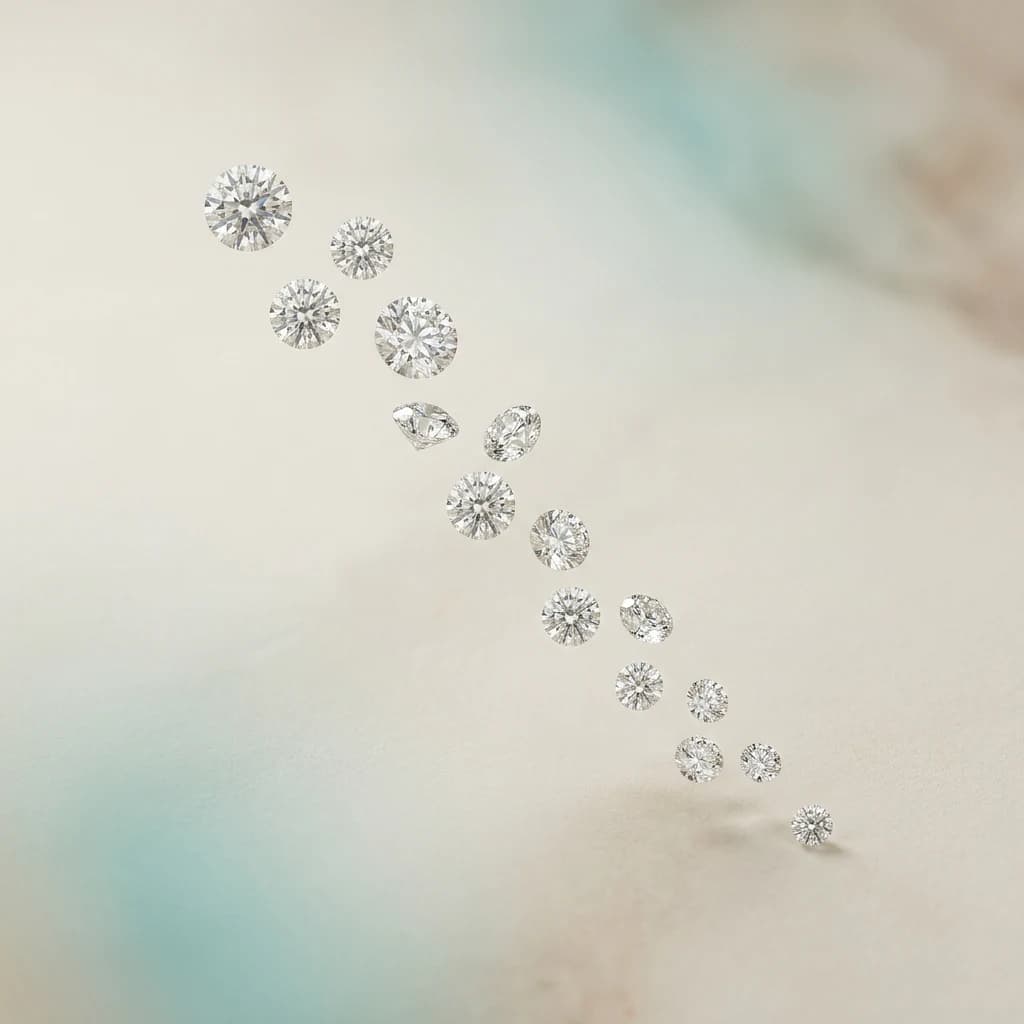
Editorial illustration created for Belaroq with Gemini 3.1 Flash Image via APIYi.
Lab-grown diamond value questions, answered
Honest answers to the value questions buyers search for, without invented numbers.
Do lab-grown diamonds have resale value?
Some, but limited. Pre-owned lab-grown pieces do sell, yet the secondhand market is thin and fragmented, and a stone typically resells for a small fraction of its retail price. Jewelers rarely buy back lab-grown stones, and secondhand buyers discount heavily. The honest position is to plan on no resale at all and treat anything recovered later as an unexpected bonus.
Do natural diamonds hold their value better?
Natural diamonds resell less reliably than their reputation suggests, and most stones sell back below retail. Rarity supports the top of the natural market, while lab-grown resale is weaker because supply can always scale. Compare total outlay rather than percentages: a lower purchase price means less money at risk, and on many budgets the lab-grown piece costs less to own overall.
What about trade-in value?
Trade-in programs that accept lab-grown stones are rare, and where upgrades are offered they are usually tied to buying a higher-priced piece. Ask about trade-in terms before you buy, and read the conditions carefully. Treat trade-in as a convenience if it exists, never as a guaranteed return. A program that will not accept your stone is not a benefit; it is a brochure.
Should you really care about resale value?
Only if resale is part of your actual plan. For jewelry worn daily, cost per wear and daily enjoyment matter far more, and a ring bought for meaning is never bought for resale. If selling later is a hard requirement, buy pre-owned or budget so that resale is a bonus. For everyone else, caring less about resale usually produces a better purchase.
What happens to lab-grown diamond prices over time?
Retail prices have generally declined as production scaled and competition grew, and this guide avoids quoting percentages because reported figures vary by date and quality band. The direction is the point: budgets buy more stone today than they did a few years ago. For buyers that is progress; for resellers it is pressure, and neither changes the quality of the stone in your hand.
How does lab grown diamond value change over time?
The piece keeps its worn value — the grades, the setting quality and the service travel with it — while its resale price tends to fall as new supply arrives. For a daily ring, that is a fine trade: the value you use every day stays, and the value you never planned to collect declines. Heirlooms keep their story even as the market moves on.
Are lab-grown diamonds a good investment?
No, and neither are natural diamonds for most buyers. Jewelry is worn, not traded, and secondhand markets discount both origins. Buy the piece you love within a budget that treats the money as spent, and let any future resale be an unexpected bonus rather than the plan. The reliable return on a diamond is the wearing of it, which no market can take back.
Why do lab-grown diamond prices fall?
Because supply is not scarce. Production capacity scales with demand, competition among growers and retailers is intense, and technology keeps improving — so new stones arrive faster than demand can chase them. Falling prices reflect supply economics, not any weakness in the diamonds themselves. A certified stone's grades stay exactly what the report says, because the price curve and the stone's quality are two different stories.
What holds value better: the stone or the setting?
In daily life, the setting earns its keep by protecting the stone, and precious metal always retains some intrinsic worth. On the resale market, neither the stone nor the setting recovers retail. The durable value is the whole piece as worn: quality, comfort, warranty and the years of wear it delivers, and the setting is what keeps the stone yours.
The practical takeaway
The right question is not what a piece resells for but what it gives while you own it. Lab-grown resale is limited, natural resale is less certain than its reputation suggests, and lab-grown prices have generally fallen — which is exactly why buyers can afford a better stone today. Judge value by cost per wear, verified grades and the service that travels with the piece, including Belaroq's lifetime warranty and free resizing. When you are ready, browse the engagement rings you compare and spend your budget on what you will see every single day — that is the value that lasts.