
Pear Shaped Diamond: The Complete Guide
A pear shaped diamond blends the soft roundness of a brilliant outline with a single pointed tip, creating a teardrop silhouette that flatters rings and necklaces alike. This guide explains what defines the shape, how ratios and symmetry change its look, which settings protect the pointed end, and what influences price when shopping for lab-grown pear diamonds. Use it to compare the outline against other shapes in our every outline compared guide before you buy.
Pear shaped diamonds at a glance
- A teardrop outline with one rounded end and one pointed tip.
- Brilliant-style faceting for lively sparkle.
- Common length-to-width ratios sit between 1.45 and 1.75.
- The pointed tip is fragile and needs protection.
- The two shoulders should mirror each other.
- Lab-grown and natural pear diamonds share the same shape.
What is a pear shaped diamond?
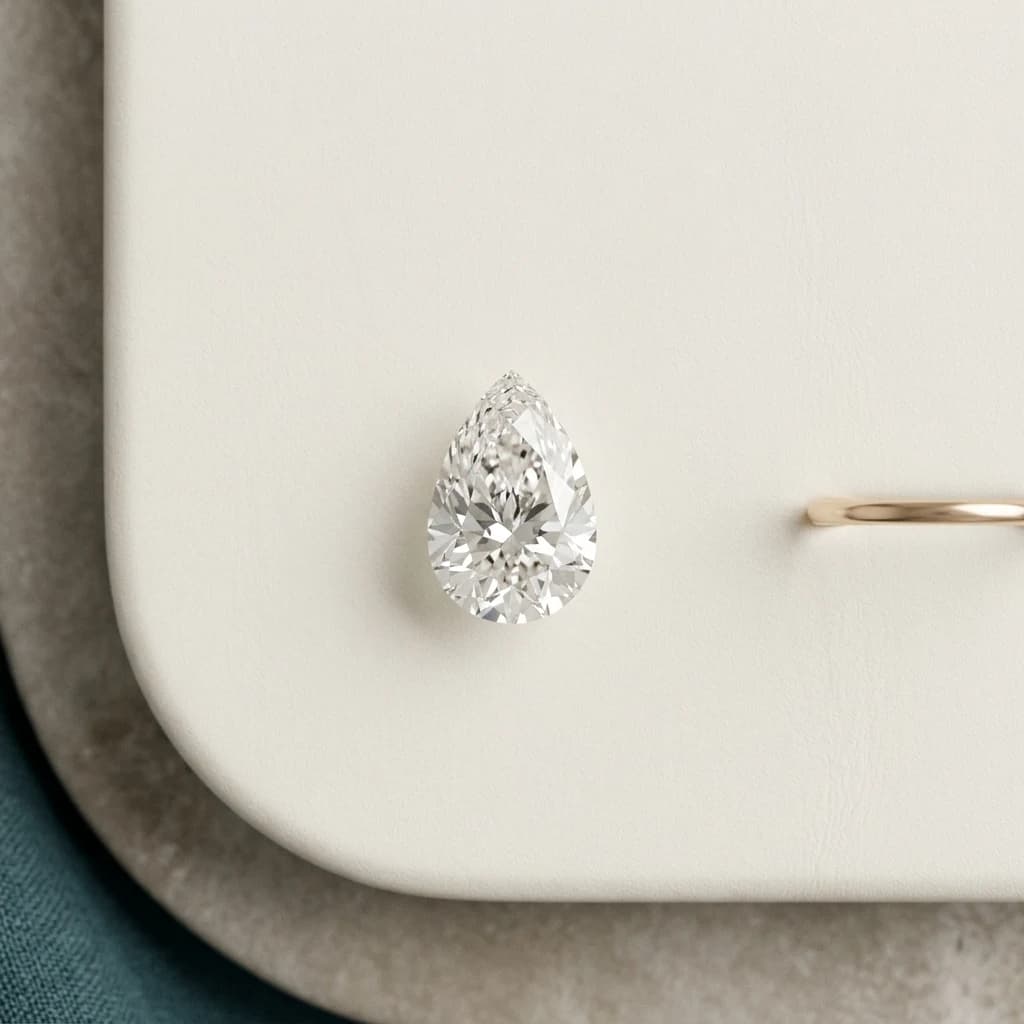
A pear shaped diamond is a brilliant-cut stone with a rounded end, a single pointed tip and gently curved sides that taper toward the point. The teardrop outline, historically known as pendeloque, pairs the softness of a round brilliant with the length of a marquise cut. Small facets cover the stone to return light across its surface.
Because the outline blends two classic shapes, a pear offers the sparkle of a round stone in a longer, more directional silhouette. That length is what makes a pear shaped diamond ring flattering on the hand, since the tapered outline draws the eye along the finger. The same effect makes pear stones attractive in pendants, where the teardrop hangs naturally from a chain.
Pear shaped pros and cons
The appeal of a pear diamond starts with its silhouette. The teardrop shape is elegant and distinctive, standing apart from the more common round and oval outlines while staying soft rather than angular. Because the outline is elongated, a pear tends to look larger face-up than a round diamond of the same carat weight, and the length flatters both hands and necklines; the same holds for pear diamonds grown in a lab.
The trade-offs center on the pointed tip and on consistency. The tip is a single sharp point that can chip if struck, so it calls for a protective setting, and elongated pear stones can show a bow-tie contrast band across the middle. Symmetry also varies between cutters, so the two shoulders should be compared before purchase.
- Pros: elegant teardrop silhouette.
- Pros: elongates the finger.
- Pros: works for rings and necklaces.
- Pros: looks larger per carat than round.
- Cons: sharp tip needs V-prong or bezel protection.
- Cons: possible bow-tie contrast.
- Cons: symmetry varies between stones.
Ratios, symmetry and settings
Most shoppers prefer pear diamonds with a length-to-width ratio between roughly 1.45 and 1.75, which produces the classic slender teardrop. Ratios below that range look fuller and rounder, while ratios above it look longer and narrower. Taste decides, but a buyer choosing a pear shaped diamond engagement ring to elongate the finger usually benefits from the middle of that range, so the ratio is worth settling before comparing which setting to choose.
The pointed tip deserves extra attention in any setting. A V-prong that cups the tip, or a partial bezel, protects the stone's most vulnerable point without hiding much of the outline. Orientation is another choice: the diamond can point up toward the fingertips or down toward the hand. Solitaire, halo and three-stone settings all suit pear stones, and comparing carat against millimeter measurements helps the finished piece stay in proportion.
Pear diamonds for necklaces and earrings
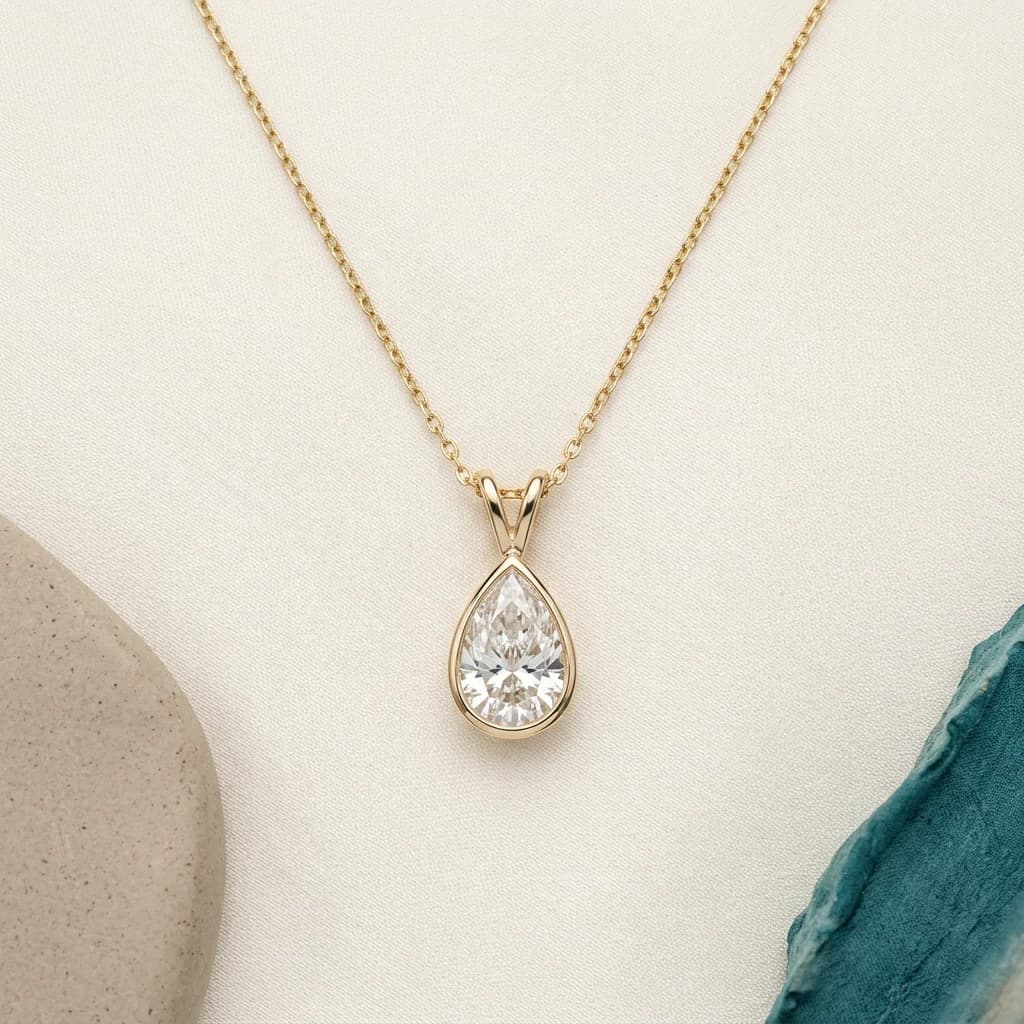
Pear diamonds are a natural fit for necklaces because the teardrop hangs gracefully from a chain. A pear shaped diamond necklace usually suspends the stone from its rounded end so the point hangs downward, though horizontal orientations appear in some pendant designs. The vertical orientation lengthens the neckline and keeps the stone stable, which also protects the tip from contact.
For a larger centerpiece, a pear shaped diamond 2 carat pendant makes a noticeable statement, with the elongated outline spreading the weight in a way that reads long and elegant. Drop earrings pair two pear diamonds in mirrored orientations. Lab-grown pear diamonds make these designs more accessible, since lab-grown stones cost less per carat than natural equivalents.
Price and value
A pear shaped diamond usually costs less per carat than a round brilliant of comparable quality, partly because cutters lose less rough when shaping an elongated outline and partly because rounds carry higher demand. Within pear diamonds, price follows the same drivers as any diamond: carat weight, color, clarity and cut quality, and the same logic applies to how lab-grown prices are set.
Belaroq publishes current lab-grown diamond prices on each product page rather than quoting figures in a guide, because prices change over time. One verified catalog rule is that moving from VS to VVS clarity steps about thirty percent up the price scale. A fully custom pear piece typically takes around thirty days from approval to delivery.
Ilustración editorial creada para Belaroq con Gemini 3.1 Flash Image mediante APIYi.
Pear shaped diamond questions, answered
Concise answers to the questions buyers ask most about pear shaped diamonds.
Are pear shaped diamonds more expensive?
No. Pear shaped diamonds generally cost less per carat than round brilliants of comparable quality, because elongated cuts waste less rough and rounds carry higher demand. Within pear diamonds, price follows carat weight, color, clarity and cut quality, with current lab-grown prices on every Belaroq product page.
Do pear shaped diamonds show more color?
Color visibility depends on cut quality, carat weight and light return rather than the pear outline itself. A well-cut pear disperses light efficiently, but larger stones can reveal body color more plainly, so comparing stones side by side in similar lighting remains the most reliable check.
Which ring styles work best with pear shaped diamonds?
Solitaires, halos and three-stone settings all suit pear stones. A solitaire lets the teardrop outline carry the design, while a halo adds face-up presence and softens the point. A V-prong or bezel on the tip protects the most vulnerable edge, which matters for a ring worn every day.
Are pear shaped diamonds out of style?
Pear shaped diamond engagement rings have moved in and out of fashion across decades, but the shape has never left the market and remains a standing alternative to oval and marquise cuts. Its blend of soft curves and a clean point keeps it versatile across modern and vintage-inspired designs.
Which way should a pear diamond point?
There is no single correct orientation. In a ring, a pear diamond can point up toward the fingertips or down toward the hand, and both directions are widely worn. In a necklace, the point usually hangs downward so the teardrop follows the neckline. Choose whichever direction you prefer.
How do you protect the tip of a pear diamond?
The pointed tip is the most vulnerable part of a pear diamond, so the setting should shield it. A V-prong that cups the point, or a partial bezel along the tip, absorbs impacts that could chip the stone. Exposed tips increase the risk of damage in daily wear.
Do pear diamonds look bigger than round?
A pear diamond can look larger than a round diamond of the same carat weight because its weight is spread along a longer outline. Face-up size also depends on the length-to-width ratio and the stone's depth, so comparing millimeter measurements rather than carat alone gives the truest sense of size.
The practical takeaway
A pear shaped diamond rewards buyers who look closely at ratio, symmetry and tip protection. Choose a length-to-width ratio that looks balanced, confirm the two shoulders match, and pick a setting that shields the point. Compared on the same quality criteria, lab-grown pear diamonds offer the same shape and sparkle as natural stones at a lower cost per carat, making pear-set engagement ring designs more attainable.