
Radiant Cut Diamond: The Complete Guide
A radiant cut diamond pairs a clean rectangular or square outline with the facet pattern of a brilliant, so buyers get geometric lines and lively sparkle in one stone. Invented in 1977, the radiant has grown into a popular alternative to emerald, princess and cushion cuts. This guide explains how the radiant cut works, how it compares with the other cuts covered in our shape comparison hub, and how to shop for one with confidence.
Radiant cut diamonds at a glance
- A rectangular or square outline with cropped corners and a brilliant facet pattern.
- Invented by Henry Grossbard in 1977.
- Delivers brilliant sparkle inside a step-cut-like outline.
- Cropped corners are less vulnerable than the sharp points of a princess cut.
- The many small facets help disguise inclusions better than step cuts.
- Available in the same shape and quality range whether lab-grown or natural.
What is a radiant cut diamond?
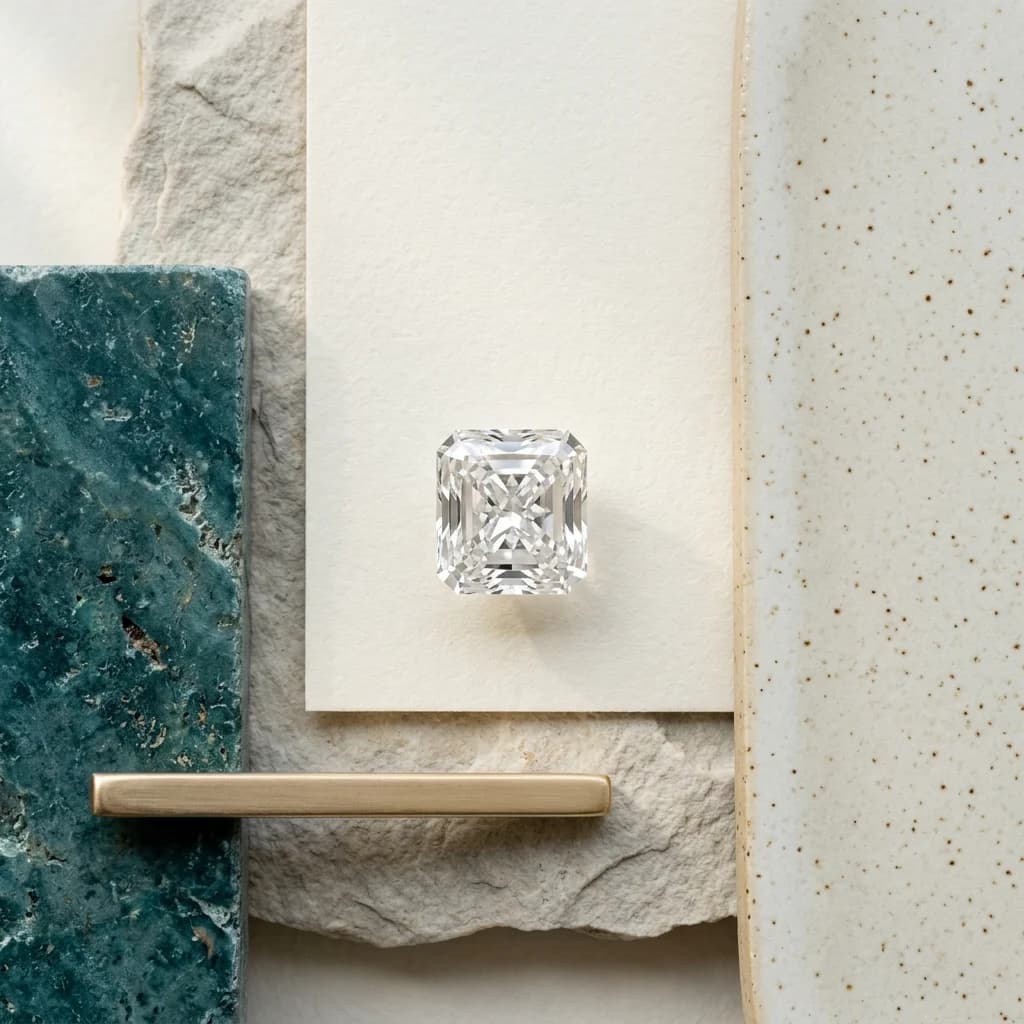
The radiant cut is a rectangular or square diamond outline with cropped corners and a brilliant-style facet arrangement underneath. The outline borrows the clean geometry people associate with emerald cuts, while the facets create the many small flashes of light that brilliant cuts are known for. Most radiant diamonds are cut in an elongated rectangular ratio, though near-square versions are also common.
The shape was invented in 1977 by New York diamond cutter Henry Grossbard, who wanted the outline of an emerald cut with more fire and sparkle. Radiant cuts have no universal cut grade from GIA the way round brilliants do, so proportions, symmetry and polish matter more than any single label. Comparing stones side by side in different lighting remains the most reliable way to judge a radiant diamond. Because the facet arrangement governs the light, a radiant diamond of a given quality behaves the same whether it was lab-grown or natural.
Radiant cut pros and cons
Radiant cuts offer a distinctive combination of a geometric frame and brilliant sparkle, which makes them a good fit for buyers who like structure but want maximum light. The cropped corners also make the stone easier to protect than sharp-cornered alternatives such as princess cuts, since the fragile points are replaced by short beveled edges. Those advantages apply equally to laboratory-grown radiants.
The trade-offs are mostly about consistency. Cut quality varies more between individual radiant diamonds than between round brilliants, and elongated radiants can show a subtle bow-tie, or darker contrast band, across the middle. Examining the exact stone in motion, not just a representative photo, helps buyers avoid a poorly proportioned example.
- Pros: brilliant sparkle inside a clean geometric outline.
- Pros: cropped corners are less vulnerable than sharp princess points.
- Pros: small facets disguise inclusions better than step cuts.
- Cons: cut quality varies more than standardized round brilliants.
- Cons: elongated versions can show bow-tie contrast.
Radiant vs emerald cut
Radiant and emerald cuts share the same family of rectangular outlines, often with similar length-to-width ratios, and a radiant cut diamond vs emerald cut comparison usually comes down to light. The difference is in the light. An emerald cut uses long step facets that return broad, mirror-like flashes, while a radiant cut uses many small brilliant facets that return smaller, more active sparkle. Buyers who prefer quiet elegance often lean emerald; buyers who want a livelier stone often lean radiant.
Clarity expectations also differ. Emerald cut diamonds reveal inclusions and color more readily because their large facets act like windows into the stone, so buyers commonly prioritize higher clarity grades there. Radiant cut diamonds hide inclusions far more effectively, which gives shoppers more flexibility on the clarity scale without a visible difference in the finished ring. Step cuts also expose body color more plainly, which is why emerald buyers often set higher color budgets than radiant buyers need.
Radiant vs cushion cut
Radiant and cushion cuts are both brilliant-cut stones that can appear rectangular, which leads some shoppers to compare them directly. The clearest difference is the outline. Radiant cuts have straight sides and cropped corners that read as crisp and architectural, while the cushion cut has softly rounded corners and a squarer, pillow-like silhouette with a more antique feel.
The choice usually comes down to style. A radiant cut suits modern, geometric settings and elongates the finger more dramatically in rectangular ratios. A cushion cut leans traditional and romantic, pairing naturally with vintage-inspired and halo designs. Both shapes can look larger face-up than their carat weight in elongated proportions, so measurements deserve as much attention as carat. If two stones look similar in photos, the corner style is the fastest way to tell a radiant from a cushion.
Settings, carat and price
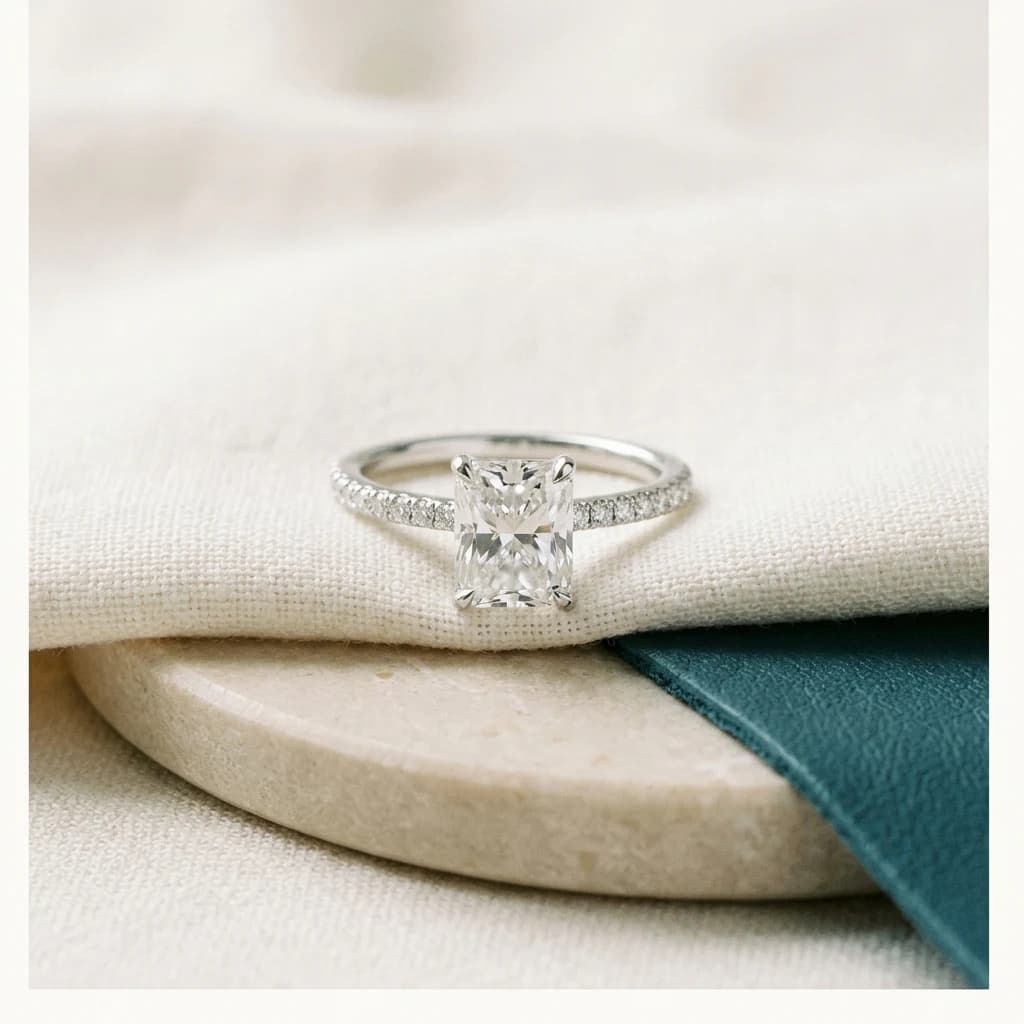
Radiant cut diamonds work well in a range of setting options, including solitaires, three-stone rings and halos. A halo draws attention to the center stone and can make a smaller carat weight look more substantial, while a solitaire lets the outline itself carry the design. Because radiant cuts have no sharp points, prongs can sit safely on the cropped corners, though a bezel or half-bezel adds further protection for daily wear. Shoppers looking for a radiant cut diamond ring will find 2 carat and 3 carat lab-grown versions across Belaroq's solitaire, halo and three-stone designs, with exact grades listed on each product page.
Carat weight describes mass, not face-up size, so a radiant cut diamond ring in 2 carat and 3 carat weights is better compared by millimeter dimensions than by carat alone. A well-cut 2 carat radiant can spread its weight differently from a deep 3 carat stone, and what lab-grown stones cost depends on cut quality, color and clarity as well as weight. Belaroq publishes current lab-grown diamond prices on each product page rather than quoting figures that can change, and our custom design process takes around 30 days from approval to delivery.
Illustration éditoriale créée pour Belaroq avec Gemini 3.1 Flash Image via APIYi.
Radiant cut diamond questions, answered
Concise answers to the questions buyers ask most about radiant cut diamonds.
What is a radiant cut diamond?
A radiant cut diamond is a rectangular or square stone with cropped corners and a brilliant facet pattern. Invented in 1977 by Henry Grossbard, it combines the geometric outline associated with emerald cuts with the smaller, livelier flashes of a brilliant-cut stone, which makes it a popular alternative to both.
Is radiant better than emerald cut?
Neither shape is objectively better. Emerald cuts return broad, mirror-like flashes and need higher clarity because their large facets expose inclusions, while radiant cuts sparkle more actively and hide inclusions well. The right choice depends on whether you prefer quiet step-cut elegance or a brighter, more brilliant stone.
What is the difference between radiant and cushion?
Both are brilliant-cut stones that can appear rectangular, but the outlines differ. Radiant cuts have straight sides and cropped corners that look crisp and geometric, while cushion cuts have rounded corners and a softer, pillow-like profile. Radiant leans modern; cushion leans vintage-inspired, which guides many buyers' decisions.
Do radiant diamonds sparkle like round?
Radiant cuts use the same brilliant-style faceting approach as round brilliants, so they produce many small, active flashes and good fire, though the faceting was adapted to a rectangular outline and varies by cutter. A well-cut radiant can be very lively, but round brilliants benefit from more standardized cut grading and consistent light return.
Are radiant cut diamonds cheaper?
Radiant cut diamonds can cost less per carat than round brilliants of comparable quality because less rough is lost when cutting a rectangular outline, though prices vary with cut quality, color and clarity. For lab-grown diamonds, check current Belaroq prices per carat and shape rather than relying on fixed comparisons.
What settings work best with radiant cuts?
Solitaires, halos and three-stone settings all suit radiant cuts. A solitaire highlights the geometric outline, while a halo adds face-up presence and complements the shape's symmetry. Cropped corners reduce the risk of chipping, and prongs on those corners or a protective bezel both work well for daily wear.
Is radiant cut good for an engagement ring?
Yes. Radiant cut diamond engagement rings are popular for their balance of geometric structure and brilliant sparkle, and the cropped corners make the stone practical for everyday wear. Its elongation can make fingers appear longer, which many buyers consider when choosing a 2 carat or larger center stone.
The practical takeaway
A radiant cut diamond is the shape to consider when you want a geometric rectangular outline with brilliant sparkle. Compare it against emerald and cushion cuts to confirm which light character and corner style you prefer, judge the exact stone by its measurements and movement rather than carat alone, and choose a setting that protects the corners. When you are ready to compare finished pieces, start with our the ring collection.