
Heart Shaped Diamond: The Complete Guide
A heart shaped diamond is a modified brilliant cut with two rounded lobes, a centered cleft and a single tapering point. The outline states its meaning at a glance, so the shape appears across rings, necklaces and earrings. This all ten shapes guide explains how hearts are cut and how to shop.
Heart shaped diamonds at a glance
- A brilliant cut shaped like a heart: two lobes, a cleft and a point.
- An unmistakable symbol of romance, readable from arm's length.
- Two matching lobes and a centered cleft define a well-cut stone.
- Symmetry, not carat weight, is the main driver of visual quality.
- Smaller face-up spread than a round brilliant of equal weight.
- Identical in lab-grown and natural diamonds, including cut standards.
What is a heart shaped diamond?
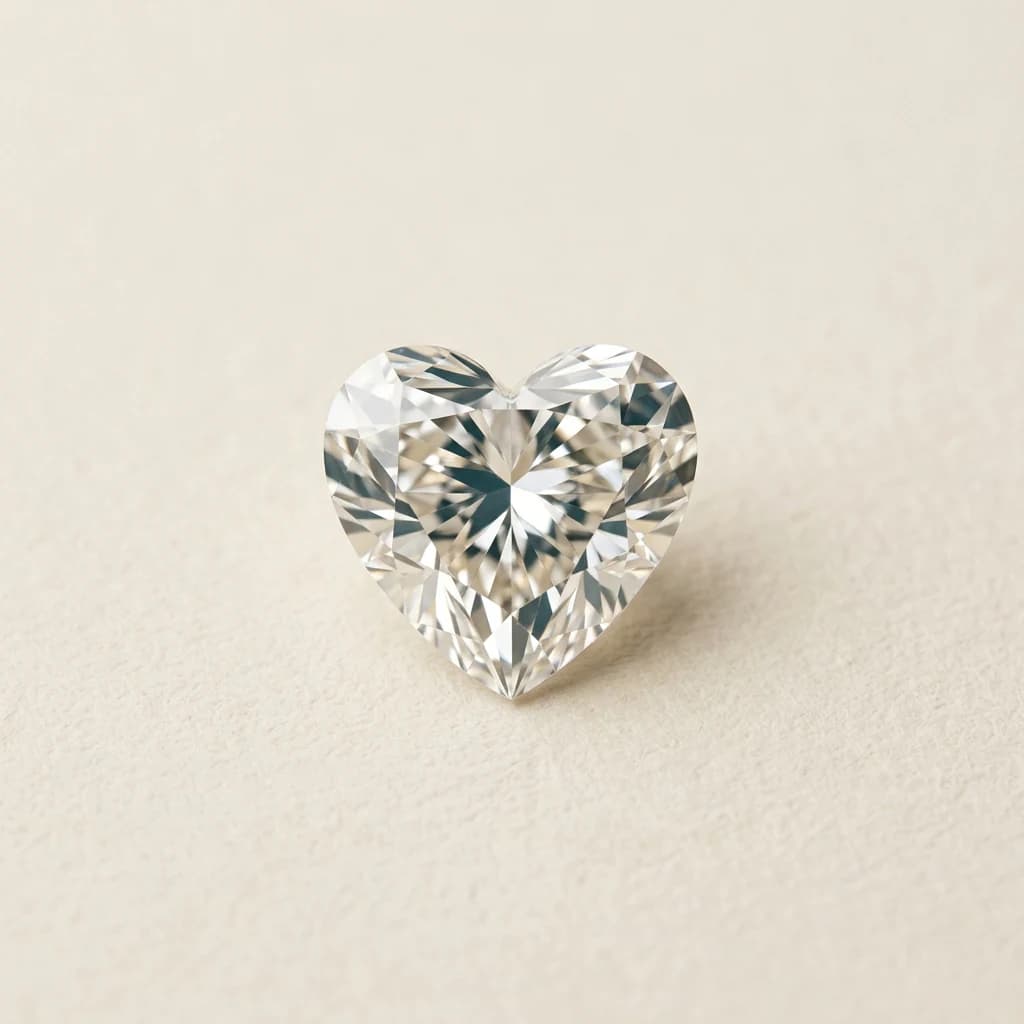
A heart shaped diamond is a modified brilliant cut whose outline forms a heart: a split crown divides into two rounded lobes, and the stone tapers to a single point. It is essentially a pear cut like the teardrop shape, with the rounded end notched, so it inherits brilliant faceting. Light return depends on how precisely the facets mirror each other across the center.
What makes the shape demanding is the outline itself. Everyone knows what a heart should look like, so a lopsided lobe, a shallow cleft or an off-center point is noticed immediately. A well-cut heart shaped diamond should read clearly as a heart from arm's length, not as a pear with a notch. Judge the outline first, then the sparkle.
Heart shaped pros and cons
The appeal is immediate. No other diamond shape states its meaning so directly, which is why a heart shaped diamond ring can feel personal without any engraving. The shape also translates well across jewelry types, holding its own in a solitaire, a pendant or a pair of studs, and hearts grown in a laboratory are no exception.
The trade-offs are practical. The heart is the hardest outline to keep symmetrical, so quality varies more between stones than with standardized cuts. The shape spreads less weight face-up than a round brilliant, so carat versus millimeter measurements matter more than the carat number alone, and the pointed tip deserves a protective setting. Style preferences shift with fashion, which is worth weighing first.
- Pros: unmistakable romantic symbolism.
- Pros: a true conversation piece.
- Pros: suits rings, necklaces and earrings equally.
- Pros: options available across many budgets.
- Cons: hardest outline to keep symmetrical.
- Cons: smaller face-up spread per carat.
- Cons: cleft and point need careful protection.
- Cons: popularity shifts with fashion.
Symmetry: the heart of quality
For a heart shaped diamond, symmetry is not a minor polish detail; it is the shape. The two lobes should match in size and curve, the cleft should sit centered and reasonably deep, and the point should fall directly below the cleft's middle. A stone that meets these conditions looks intentional; one that misses looks accidental.
Judging symmetry is straightforward. Hold the stone face-up and draw an imaginary line from the cleft to the point; everything on the left should mirror the right. Then check the outline in different lights, since an uneven lobe is easiest to spot in profile. A poorly proportioned heart can look lopsided even to an untrained eye, so cut quality matters more here than with most shapes.
Best settings and jewelry types
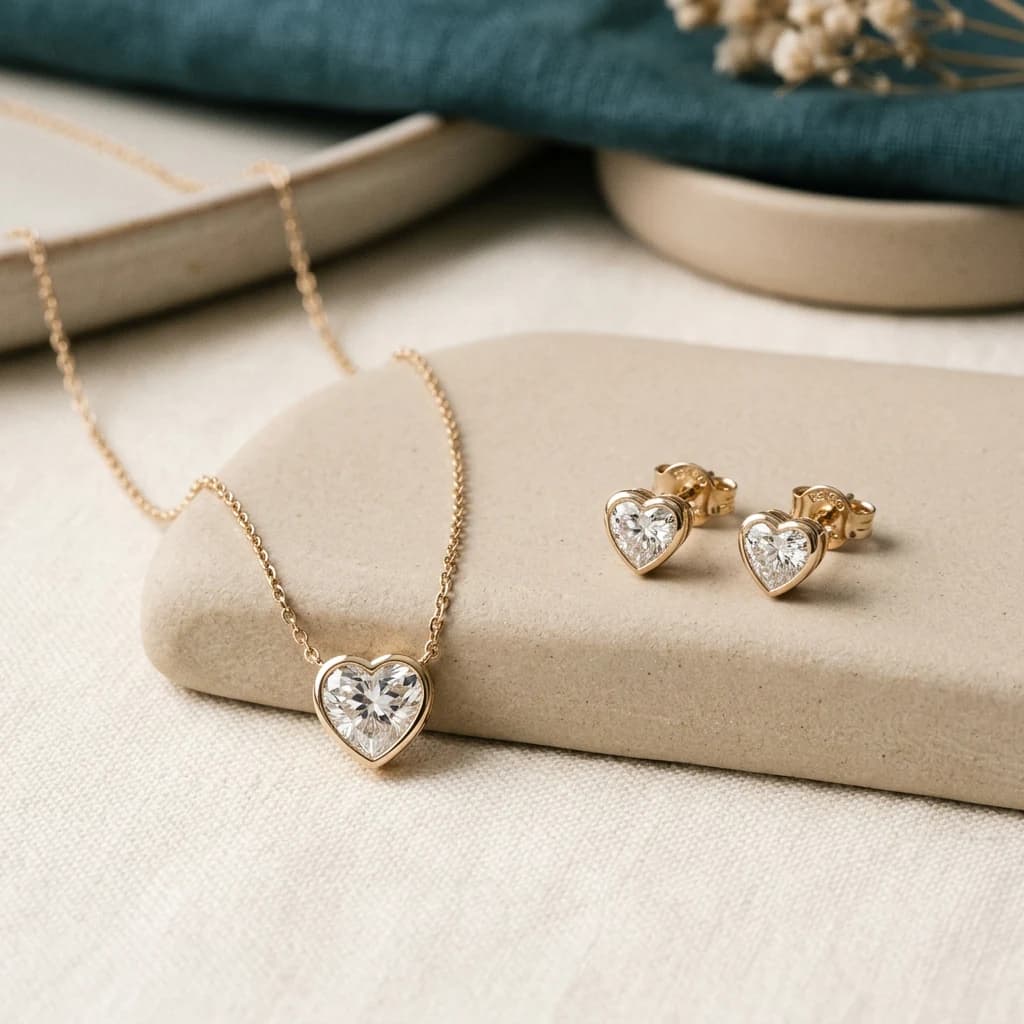
A three-prong solitaire is the classic heart shaped diamond ring choice among different settings: one prong protects the cleft, one guards each lobe, and minimal metal lets the outline speak. Halos follow the heart's contour and add face-up presence, while a bezel traces the outline in metal and offers the most protection for a pointed tip.
A heart shaped diamond necklace usually appears as a pendant on a simple chain, with the point hanging down, a look most pendants share. Heart shaped diamond earrings are most practical as matched studs, since two identical outlines double the symmetry requirement. Whichever piece you choose, the setting should follow the outline rather than fight it.
Price and value
Pricing for heart shaped diamonds varies with cut precision more than most shapes, because the symmetry work is harder to execute well. The same logic runs through the lab-grown price guide. Demand also follows a seasonal rhythm around gifting occasions, so similar specifications can list at different times. Belaroq avoids quoting figures that change and publishes the current price on each product page.
For verifiable anchors, start with Belaroq's own catalog. Complete lab-grown pieces begin at or below US$500 in the jewelry-under-500 collection, and the displayed VVS price sits 30% above the same product's VS price, a July 2026 snapshot. A custom heart design follows the standard process of around 30 days from approval to delivery.
Illustration éditoriale créée pour Belaroq avec Gemini 3.1 Flash Image via APIYi.
Heart shaped diamond questions, answered
Concise answers to the questions buyers ask most about this shape.
Is a heart shaped diamond good for an engagement ring?
Yes, for buyers who want unmistakable symbolism. A heart shaped diamond engagement ring reads as romantic at a glance and suits solitaires, halos and three-stone designs. The key is well-matched lobes, since the shape's symmetry is visible even in photos.
How do you judge heart diamond symmetry?
Look at the stone face-up and trace an imaginary line from the cleft through the point. The lobes should mirror each other in size and curve, the cleft should sit centered, and the point should fall directly below it. Rotating the stone reveals uneven lobes.
Are heart diamonds more expensive?
Not by a fixed rule. Hearts often carry more cutting labor per carat because the symmetry is harder to produce, and seasonal demand can move prices. Within one catalog the comparison stays reliable: at Belaroq, the displayed VVS price sits 30% above the same product's VS price.
What settings work best with heart diamonds?
A three-prong solitaire is the traditional choice, with one prong on the cleft and one on each lobe. Halos add face-up size and follow the outline, while a bezel protects the pointed tip best. Pendants and studs need less metal, but the setting should still trace the shape.
Do heart diamonds look small?
They can, because the wide top and narrowing point spread less weight face-up than a round brilliant of equal carat weight. A slightly higher carat weight, a halo setting, or a broader-faced stone can compensate. Comparing millimeter measurements is more useful than carat numbers alone.
Are heart shaped diamonds out of style?
The shape's popularity follows gift seasons, so it appears less often than rounds or ovals in searches. That is an availability pattern, not a style verdict. A well-cut heart remains a deliberate, personal choice, and its meaning has not changed.
What does a heart shaped diamond symbolize?
The heart outline is one of the oldest symbols of love, and a heart shaped diamond states that meaning without words. It has been tied to romantic gifting for decades, from pendants to engagement rings. The appeal is clarity: the stone announces its intention at a glance.
The practical takeaway
A heart shaped diamond is a statement of intent, so the statement deserves good symmetry. Judge the lobes, cleft and point first, then choose a setting that protects the outline. For an engagement ring, necklaces and earrings alike, a well-cut lab-grown heart delivers the same romance at prices shown on each product page.