
Diamond Cut Quality: How Cut Drives Sparkle
Cut is the quality factor that decides how much light a diamond returns, which is why it shapes sparkle more than color, clarity or carat. This guide explains what diamond cut quality means, how the cut grade scale works, how many cuts a round brilliant carries, the difference between ideal and excellent cut, and how cut affects price. Everything here applies equally to laboratory-grown stones; the complete lab-grown guide covers what those stones are and how they are grown.
Cut controls light return, so cut quality shapes sparkle more than any other C.
Cut quality determines how much light a diamond returns to the eye, which is why a well-cut stone sparkles more than a poorly cut stone with higher color and clarity grades, making cut the single most important factor in how a finished piece looks.
Diamond cut quality at a glance
- Cut is craftsmanship, not shape: the cut grade describes proportions, symmetry and polish, while shape names the outline, such as round, oval or princess.
- Only the round brilliant receives standardized cut grades from major laboratories; fancy shapes are assessed by eye rather than given a cut grade on the report.
- Cut decides the three parts of sparkle — brightness, fire and scintillation — by controlling how light enters, reflects and exits the stone.
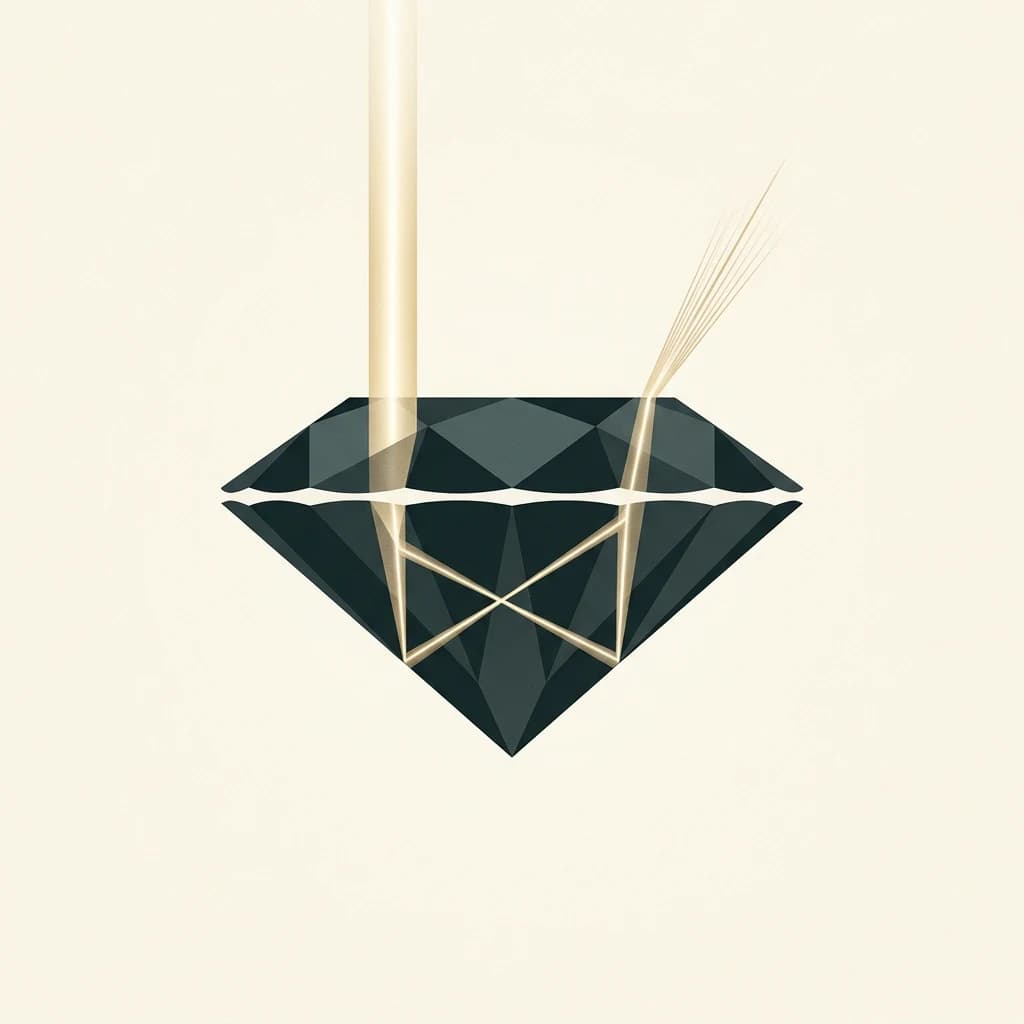
- A pavilion cut too deep or too shallow leaks light through the bottom or sides, which is why two stones with identical color and clarity grades can look visibly different.
- The round brilliant is cut with 57 facets, or 58 when the culet is faceted, and those are the cuts people mean when they ask how many cuts are in a diamond.
- Cut grades run from Excellent down to Poor, with Very Good, Good and Fair between, and each step describes how well the proportions return light.
- Laboratory-grown diamonds are cut and graded on the same cut standards as natural diamonds, because the two are the same material.
What is diamond cut quality?
Diamond cut quality is a measure of craftsmanship, not shape. The cut grade records how well a stone's proportions, symmetry and polish are executed — the angles of the crown and pavilion, the alignment of the facets, the finish of the surface. Shape, by contrast, names the outline the rough crystal is cut into, such as round, oval or emerald. The two ideas get tangled because one verb describes both, but in grading, cut is about light, not outline, which is why asking how many cuts are in a diamond actually asks about the facets.
A round brilliant is cut with 57 facets, or 58 when the culet is faceted, and those are the cuts. They exist to return light, because brightness, fire and scintillation all follow from angles. Light entering through the table reflects off the pavilion facets and returns through the crown, or leaks away when the angles are off. Cut is graded separately from color, which records body tint on the diamond color scale, and from clarity, which records internal characteristics. A stone with top color grades still looks dull when the cut is poor.
How cut grades work
Cut grading compares a stone's proportions against the ranges known to return light, then checks symmetry and polish under magnification. The review is closer to an engineering check than a matter of taste, which sets it apart from how clarity is graded, where the grader weighs the size and position of inclusions. For the round brilliant, laboratories assign one of five cut grades — Excellent, Very Good, Good, Fair or Poor — ordered here from best to worst.
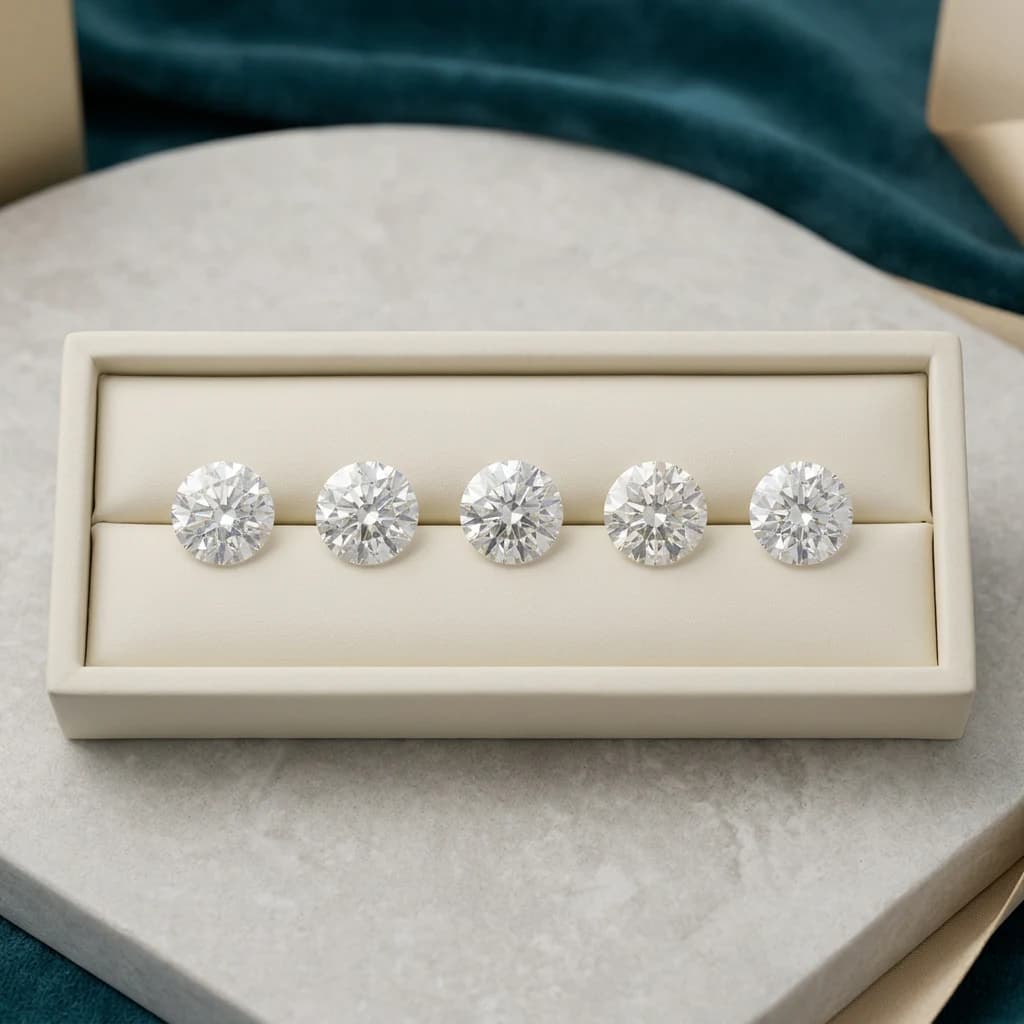
The five-grade scale exists only for the round brilliant, because decades of light-performance research apply to that shape specifically. Fancy shapes — oval, cushion, emerald and the rest — do not receive standardized cut grades on most reports; their cut is judged by eye and by the seller's own quality control. A cut grade on a fancy-shape stone may therefore be a retailer's wording rather than a laboratory's, so read the report carefully. The diamond cut quality chart below summarizes the round brilliant scale.
| Cut grade | What the proportions do | What it means for sparkle |
|---|---|---|
| Excellent | Proportions, symmetry and polish inside the tightest ranges known to return the most light | Maximum brightness, fire and scintillation, with almost all light leaving through the top of the stone |
| Very Good | Proportions just outside the Excellent ranges, with strong symmetry and polish | Near-top sparkle; the visible difference from Excellent is small for most eyes |
| Good | Proportions that return most light but allow a measurable share to escape | Bright and lively with slightly less fire than the top two grades |
| Fair | Proportions that allow noticeable light to leak through the pavilion or sides | Visibly reduced brightness and weaker fire, especially in larger stones |
| Poor | Proportions far outside the light-returning ranges, or clear symmetry and polish problems | A dull appearance; rarely carried by reputable jewelers whatever the color grade |
This table summarizes the GIA cut grading system for round brilliant diamonds, ordered best to worst. Each laboratory defines its own grade boundaries, and fancy shapes are not covered by standardized cut grades, so the report wording for the stone in hand always controls.


Cut and the other Cs
Cut does not work in isolation; it changes what the other Cs are worth. A well-cut stone returns so much light that faint warmth in color and minor inclusions become harder to notice, because brightness dominates what the eye sees first. A poorly cut stone does the reverse, letting tint and inclusions show through a duller surface. That interaction is why experienced buyers set a floor on cut quality first and let the other grades flex around it.
The practical effect shows up in budgets. Many shoppers overpay for a clarity step they cannot see while accepting a cut grade that visibly costs sparkle every day, which is backwards. When comparing clarity grades, the VS-versus-VVS decision matters less than the cut grade, because the clarity difference lives at 10× magnification while the cut difference lives in normal light. The rule that holds: spend on cut first, then size, then the grades that are hard to see.
Ideal vs excellent cut
Ideal is a term retailers and some laboratories apply to the top tier of cut proportions, while Excellent is the top cut grade on the GIA scale. The two labels describe almost the same thing: proportions, symmetry and polish inside the tightest ranges, built for maximum light return. When the ideal versus excellent question comes up, the honest answer is that both labels point at the same ambition — the best sparkle the stone can produce — and the difference is mostly a matter of which vocabulary the seller uses.
The decision most buyers actually face sits one step lower: very good versus excellent. A Very Good stone sits just outside the tightest proportion ranges and usually looks nearly identical to an Excellent one in normal wear while costing less, which makes Very Good the value point many buyers choose. The gap becomes easier to see in larger stones and in controlled lighting, where the Excellent stone's tighter symmetry shows. Practical advice: compare the two grades on stones you can see, then let budget and size decide.
How cut affects price
Better cut costs more for two honest reasons: a cutter sacrifices more of the rough crystal to reach ideal angles, and buyers compete harder for the finished result. The size of the premium varies stone by stone, and Belaroq does not quote invented market percentages. The verified anchors are the company's own: the same product in VVS clarity lists about 30% above its VS version, complete pieces start at or below $500 in the jewelry-under-500 collection, and the product page always carries the final price for the exact specification shown.
Within the catalog, cut quality is built into every design rather than sold as an upgrade, so the price on the page already reflects the stone, the metal and the work. For a fuller picture of how lab-grown pricing behaves, the pricing guide walks through carat, grades and settings step by step. The practical rule: compare finished pieces at the same size and cut grade, and treat the listed price as the price, not a starting point.
Ilustración editorial creada para Belaroq con Gemini 3.1 Flash Image mediante APIYi.
Diamond cut questions, answered
Concise answers to the most common diamond cut questions.
What is diamond cut quality?
Diamond cut quality describes how well a stone's proportions, symmetry and polish return light to the eye. It is the craftsmanship behind brightness, fire and scintillation, and it is graded separately from shape, color and clarity. For the round brilliant, major laboratories assign grades from Excellent down to Poor, and cut quality is widely considered the biggest driver of a diamond's appearance.
How many cuts are in a diamond?
The cuts are the facets. A standard round brilliant is cut with 57 facets, or 58 when the culet is faceted, arranged around the stone to return maximum light. Other shapes carry different facet counts, so the number varies by shape. When someone asks how many cuts are in a diamond, the facet count is the answer.
What is the difference between ideal and excellent cut?
Ideal is a descriptive term for the tightest tier of proportions, used by retailers and some laboratories, while Excellent is the top cut grade on the GIA scale for round brilliants. The two labels describe essentially the same ambition — maximum light return — so the difference is vocabulary rather than quality, and either claim should be confirmed by the report's actual cut details.
Is very good cut good enough?
For most buyers, yes. A Very Good stone sits just outside the tightest proportion ranges and typically looks nearly identical to an Excellent stone in normal wear, often for less money. The difference becomes easier to see in larger stones or controlled lighting. Very Good is a sensible value point when the budget would otherwise sacrifice size.
Does cut affect diamond price?
Yes, and in two directions. Better-cut stones discard more of the rough crystal during cutting, and demand for top cut grades runs higher, so price rises. The premium varies stone by stone, and Belaroq does not quote invented market percentages. The reliable comparison is between finished pieces of the same size and specification on the product page.
Why is cut more important than clarity?
Cut affects how the stone performs every second it is worn, because it controls light return, while clarity differences between adjacent grades are usually invisible without magnification once the stone is set. A well-cut stone with minor inclusions sparkles; a poorly cut flawless stone looks dull. Cut shapes the everyday experience, which is why it outranks clarity.
Do lab-grown diamonds have cut grades?
Yes. Laboratory-grown diamonds are the same material as natural diamonds and are cut to the same proportions, so laboratories apply the same cut standards to both origins. Round brilliants receive the standard Excellent-to-Poor scale, and cut grades on lab-grown reports read the same way. Fancy shapes remain ungraded by standardized scales in either origin.
Which cut grade should I choose?
Choose Excellent or Very Good for round brilliants, because the top two grades return nearly all the light the shape can produce, with Very Good usually the better value. Good can work for small accent stones where sparkle differences are hard to see. Below that the stone visibly underperforms, so Fair and Poor are best avoided in fine jewelry.
The practical takeaway
Cut is the C that manufactures sparkle. The cut grade measures proportions, symmetry and polish, and only the round brilliant receives standardized grades from Excellent to Poor, while fancy shapes are judged by eye. Ideal and Excellent describe the same top-tier ambition, Very Good is the practical value point, and cut outranks the other Cs because light return is visible every day. Laboratory-grown stones are cut and graded exactly like natural ones. Set a floor on cut first, let budget and the other grades flex, and make the cut grade the first filter for the engagement ring you choose or any other piece.